Informal gold mining in Madre de Dios, Vicariate of Puerto Maldonado, Peru
Author: Patrick McQuestion, PhD candidate, Kroc Institute for International Peace Studies, Keough School of Global Affairs, University of Notre Dame
Year: 2026
Location: Madre de Dios, Peruvian Amazon
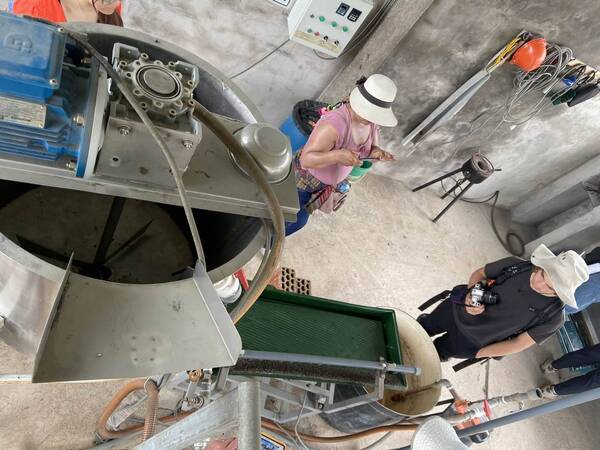
The population of Madre de Dios more than doubled between 2000 and 2026. The arrival of large numbers of gold miners have reshaped the social, political and ecological landscape of the region in unprecedented ways. These rapid changes have created several governance challenges for which neither state nor market have provided solutions. Drawing from decades of pastoral experience in the region, the Social Pastorate of the Vicariate of Puerto Maldonado has taken the role of a governance actor and filled some of the institutional gaps produced by public under-investment in the region. This case study highlights three aspects of its work: organizational support for the mining formalization process, with a focus on women artisanal miners; technical assistance in collaboration with the scientific community to introduce “responsible” mining practices such as mercury-free shake tables and reforestation; and entrepreneurial support for alternative forest-based livelihoods. The case illustrates how the Catholic Church in Madre de Dios acts as a central node in a multi-actor ecosystem that spans scientific, economic, and agricultural dimensions to promote integral ecology in the face of ecological devastation and violence. The case challenges a conflict-oriented framework that has so far characterized accounts of the Catholic Church’s involvement in mining in Latin America.
Translations were done with DeepL translation software and proofread by human readers who are native language speakers.
Resources
- Informal Gold Mining in Madre de Dios, Vicariate of Puerto Maldonado, Peru
- La minería aurífera artesanal en Madre de Dios, Vicariato de Puerto Maldonado, Perú
- L’exploitation aurifère artisanale à Madre de Dios, vicariat de Puerto Maldonado, Pérou
- Mineração de ouro informal em Madre de Dios, Vicariato de Puerto Maldonado, Peru